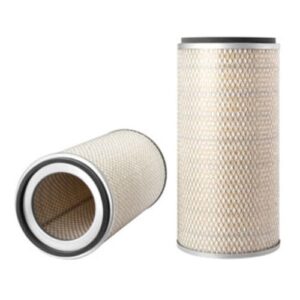
How to Choose the Right Industrial Filter Cartridge: A 2026 Buyer’s Checklist for Global Procurement Teams
Published by XFHC Air Filter (Anping Xiangfang Filter Materials Co., Ltd.) | March 2026
Why This Guide Exists
There is a gap in the industrial filtration market — and it’s not a gap in supply.
It’s a gap in knowledge.
Thousands of procurement teams around the world source filter cartridges every quarter. Most rely on three inputs: catalog specs, supplier price quotes, and past habits. Very few have a structured framework for evaluating whether the filter they’re ordering will actually perform — in their specific application, in their specific operating environment, under their specific load conditions.
This guide closes that gap.
Whether you’re ordering industrial dust collector cartridges for a cement plant in Egypt, activated carbon filters for an HVAC system in Germany, stainless steel filter elements for a chemical processing facility in South Korea, or truck air filters for a fleet operation in Brazil — this checklist applies.
Read it once. Use it every time.
Part 1: Before You Even Open a Catalog
Step 1 — Define Your Contamination Profile
The single most important input in filter selection is one most buyers skip: What exactly are you filtering, and why?
Answer these questions before contacting any supplier:
For air filtration (engine & industrial):
- What is the ambient dust concentration? (mg/m³)
- What is the particle size distribution? (bulk dust, fine particulate, sub-micron aerosols)
- Are there oil mist or chemical vapors in the airstream?
- What is the operating temperature and humidity range?
- What is the required service interval (km, hours, or months)?
For liquid filtration (oil, hydraulic, process):
- What fluid is being filtered? (engine oil, hydraulic oil, coolant, chemical)
- What is the target cleanliness class? (ISO 4406 or NAS 1638 code)
- What is the system pressure and flow rate?
- Is there risk of water contamination or emulsification?
- What bypass valve setting does the system require?
For gas-phase / odor filtration (activated carbon):
- What specific compounds need to be removed? (VOCs, H₂S, NOx, formaldehyde)
- What is the face velocity across the filter?
- What are the temperature and relative humidity conditions?
- What is the required service life between carbon replacement cycles?
This contamination profile is your specification baseline. Any supplier who doesn’t ask these questions before quoting is selling you a catalog product, not a solution.
Step 2 — Establish Your Performance Baseline
Once you know what you’re filtering, establish the minimum performance thresholds your application requires:
| Application Type | Minimum Performance Threshold |
|---|---|
| Engine air intake (on-highway truck) | ISO 5011 efficiency ≥ 99.9% at rated dust; service life ≥ 8,000 km |
| Industrial dust collection (workplace) | EN 1822 H13 or ISO 16890 ePM1 ≥ 85%; PM2.5 compliant |
| Hydraulic oil filtration | β10(c) ≥ 200 (ISO 16889); ISO 4406 cleanliness class ≤ 16/14/11 |
| Activated carbon (VOC control) | Target compound breakthrough ≤ 10% at rated face velocity for ≥ 12 months |
| HVAC / air conditioner | ISO 16890 ePM1 ≥ 50% (minimum); ePM2.5 ≥ 70% (preferred) |
| Stainless steel process filtration | Absolute retention rating at stated µm; 100% integrity test (bubble point) |
These thresholds become your minimum acceptable specification. Any product that doesn’t meet them is disqualified — regardless of price.
Part 2: Evaluating Filter Media Quality
The filter media — the actual material that does the filtering — is where most cost-cutting happens, and where most filter failures originate.
What to Look for in Air Filter Media
Nanofiber surface treatment:
High-performance air filters use a nanofiber layer bonded to a substrate. This layer:
- Provides surface filtration (dust cake forms on the surface, not deep in the media)
- Enables efficient pulse-jet cleaning (critical for dust collectors)
- Dramatically reduces pressure drop compared to depth-filtration media
- Extends service life by 2–3× compared to standard cellulose or synthetic media
Pleat geometry:
Pleat spacing, depth, and uniformity directly affect both filtration area and airflow distribution. Inconsistent pleat spacing — a common defect in low-cost filters — creates high-velocity channels that bypass filtration zones.
Media integrity:
Ask for pinhole leak test data. Any perforation in the media — invisible to the eye — creates a bypass path that renders high-efficiency ratings meaningless.
👉 XFHC’s truck and automotive air filters use reinforced nanofiber media with precision-formed pleat geometry and 100% pinhole integrity testing.
What to Look for in Dust Collector Filter Media
Industrial dust collector cartridges face a uniquely demanding operating environment: continuous particulate loading, periodic pulse-jet cleaning cycles, and exposure to moisture, temperature swings, and sometimes chemically aggressive dusts.
Key media properties:
- Basis weight (g/m²): Heavier media isn’t always better — it depends on the application. Over-dense media restricts airflow; under-dense media fails structurally under pulse-jet stress.
- Wet strength: For humid or outdoor applications, media must retain structural integrity when wet. Look for wet tensile strength data.
- Chemical resistance: Some industrial dusts (cement, metal oxides, certain chemicals) are mildly acidic or alkaline. Media must not degrade on contact.
- Antistatic treatment: In explosive dust environments (grain, coal, chemical), antistatic media prevents static discharge ignition.
👉 See XFHC’s industrial dust collector filter cartridges — engineered with nanofiber netting, antistatic options, and fireproof frames for cement, mining, and pharmaceutical applications.
What to Look for in Activated Carbon Filter Media
The activated carbon market is full of misrepresentation. “Activated carbon filter” on a product label tells you almost nothing about performance. Here’s what the label should tell you — and what to demand from suppliers:
Carbon type:
- Coconut shell carbon: Highest micropore volume, best for VOC and odor control. Premium standard.
- Coal-based carbon: Lower cost, adequate for bulk gas-phase removal. Acceptable for non-critical applications.
- Wood-based carbon: High mesopore volume, better for large molecular weight compounds. Specialty use.
Carbon bed specifications:
- Bed depth (mm): Minimum 10mm for meaningful VOC service life; 25mm+ for demanding applications
- Carbon bulk density (g/L): Higher density = more carbon mass per unit volume
- Activity (iodine number, mg/g): Higher iodine number = higher adsorption capacity
What to reject:
Thin carbon layers sprayed onto a non-woven substrate, marketed as “carbon filters.” These offer minimal service life and are primarily a cost-reduction measure disguised as a product category.
What to Look for in Oil Filter Media
Oil filter media operates under conditions that would destroy air filter media: sustained temperatures up to 150°C, exposure to lubricant additives and combustion byproducts, and mechanical stress from pressure pulses.
Critical media properties:
- Filtration efficiency: Full-flow efficiency at 10 µm (β10 ≥ 200 per ISO 16889)
- Thermal stability: Media must not degrade or release fibers at sustained operating temperatures
- Compatibility: Media binders and adhesives must be compatible with synthetic lubricant chemistries
- Collapse resistance: Under cold-start high-differential-pressure conditions, media must not collapse
👉 XFHC’s oil filter elements are engineered for full-flow efficiency at β10 ≥ 200, with high-temperature binders and anti-collapse construction for extended-drain-interval applications.
Part 3: Evaluating Filter Construction Quality
Media quality is half the story. The other half is construction — how the filter is assembled, sealed, and reinforced.
End Cap Integrity: The Hidden Failure Point
The junction between the filter media pack and the end caps is the most common failure point in industrial filter cartridges. Poor bonding at this junction creates bypass gaps — the filter appears intact, but unfiltered fluid bypasses the media entirely.
What to demand:
- Plastisol or polyurethane end cap bonding (thermally stable; chemical resistant)
- 360° continuous bond line (no gaps, no partial bonds)
- Pull-force test data: End caps should withstand ≥ 50N pull force without separation
Frame and Support Cage
For pleated filter cartridges, the structural cage:
- Must prevent pleat collapse under high differential pressure
- Must allow full media surface utilization (oversized cage = wasted filtration area)
- Must be compatible with the fluid being filtered (steel cage in aggressive chemical service = corrosion contamination)
Gasket and Seal Material
The filter housing seal is the last line of defense against bypass. Gasket material must be:
- Chemically compatible with the fluid (oil-resistant NBR for lubricant applications; silicone or EPDM for high-temperature or food-grade applications)
- Dimensionally stable (no compression set that allows seal blowout at pressure)
- Temperature rated beyond the maximum operating temperature
Stainless Steel Elements: When Welding Quality Is Everything
For stainless steel filter elements, weld quality is the dominant quality factor. Poor welds create:
- Leak paths at mesh-to-end-cap joints
- Stress concentration points that lead to fatigue cracking under cyclic pressure
- Corrosion initiation sites (sensitization of 316L at weld heat-affected zones)
What to demand:
- TIG or laser welding (not spot welding) for wetted joints
- Weld inspection records (visual + dye penetrant for critical applications)
- Passivation treatment post-welding (removes iron contamination from weld zone)
- Bubble-point integrity test on finished elements
👉 XFHC’s stainless steel elements undergo full weld inspection and passivation. Available in 304, 316, and 316L in pore sizes from 1 µm to 500 µm.
Part 4: Evaluating the Supplier — Beyond the Product
A filter cartridge is only as reliable as the manufacturer behind it. Here’s how to evaluate a filtration supplier as a business partner, not just a product vendor.
Manufacturing Transparency
Green flags:
- Factory audit capability (welcomes third-party QC inspectors)
- In-house filter media testing lab
- Documented incoming material inspection (IQC) process
- Manufacturing location in a recognized filtration industry cluster
Red flags:
- Unable to provide factory address or photos
- Sample lead time > 2 weeks (suggests sub-sourcing)
- Test certificates with no lab identification or accreditation number
- Unwillingness to allow third-party audit
XFHC is based in Anping County — China’s premier filtration manufacturing hub — with 25+ years of in-house manufacturing. Learn more about us or meet our team.
Quality System Certification
Minimum acceptable: ISO 9001:2015 quality management system certification.
For specialized applications, additionally look for:
- IATF 16949 (automotive supply chain)
- ISO 14001 (environmental management — increasingly required by European importers)
- Product-specific certifications (EN 1822, ISO 16890, ISO 5011)
OEM/ODM Capability: The Differentiator
For distributors, importers, and large end-users, the ability to source custom-specification filters under your own brand is increasingly a competitive requirement.
Genuine OEM/ODM capability means:
- In-house tooling and die capability (not outsourced to third parties)
- Media selection flexibility (not limited to one or two catalog grades)
- Custom dimension capability (not just length variants)
- Private label and branded packaging
- Production allocation priority for long-term partners
Contact XFHC to discuss OEM/ODM partnership — we support custom development across all product lines, with tiered pricing for qualified volume partners.
Part 5: The Procurement Decision Matrix
Use this matrix to score potential suppliers on a 1–5 scale across key dimensions:
| Evaluation Dimension | Weight | Your Score (1–5) | Weighted Score |
|---|---|---|---|
| Media certifications (ISO 16890 / EN 1822 / ISO 5011) | 25% | — | — |
| End cap and seal construction quality | 20% | — | — |
| Factory audit / manufacturing transparency | 15% | — | — |
| OEM/ODM flexibility | 15% | — | — |
| Sample lead time (≤7 days = 5; >14 days = 1) | 10% | — | — |
| Technical support responsiveness | 10% | — | — |
| Industry/region-specific references | 5% | — | — |
Score interpretation:
- 4.5–5.0: Strategic partner candidate
- 3.5–4.4: Qualified supplier — proceed with trial order
- 2.5–3.4: Conditional — request additional documentation
- Below 2.5: Disqualify
Conclusion: Precision Procurement Is a Competitive Advantage
In 2026, the industrial buyers who win are not those who find the lowest-cost filter. They’re the ones who build the best filtration supply chains — with manufacturers who understand their applications, stand behind their certifications, and deliver consistent performance across thousands of units over multi-year partnerships.
That’s what XFHC Air Filter is built for.
📧 Email: qin@xfmesh.com
📱 WhatsApp: +86 19932383113
🌐 Website: www.xfmesh.com
📋 View All Products: https://xfmesh.com/products/
📞 Contact Us: https://xfmesh.com/contact-us/
Follow XFHC on social media:
🐦 X / Twitter | 📘 Facebook | 📸 Instagram | 📌 Pinterest | 🎵 TikTok